Loading

Blog

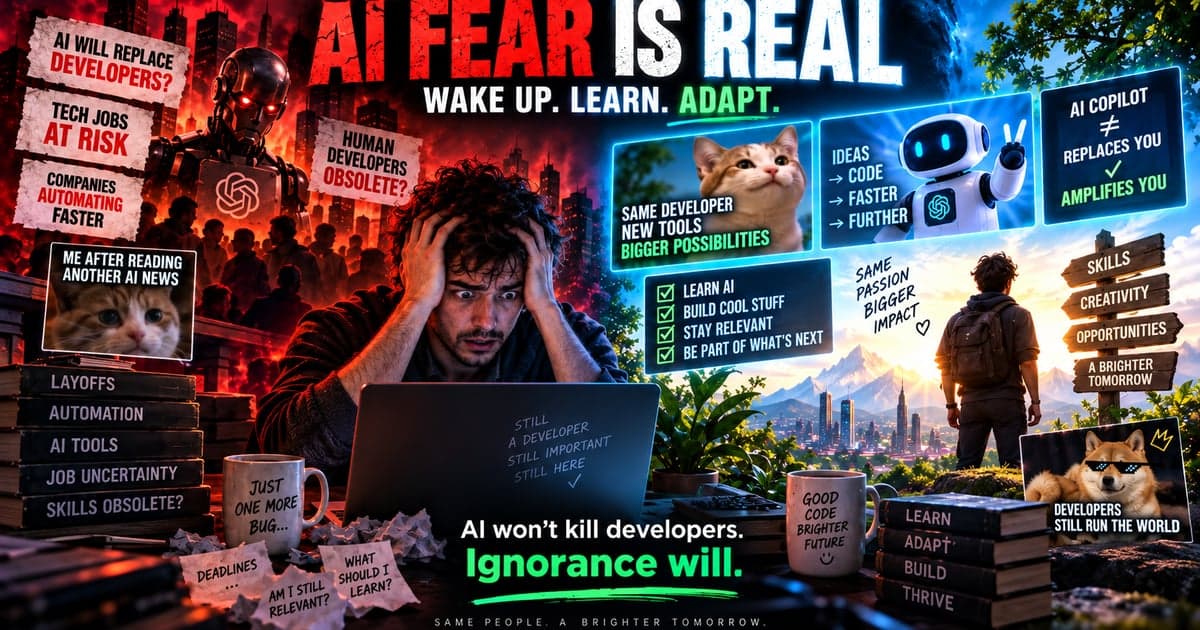
Artificial intelligence is changing the job market faster than most professionals expected. Tasks that once required hours can now be completed in minutes using AI.
But this does not mean careers are disappearing.
The real change is what companies are willing to pay for.
Employers increasingly value people who can combine professional expertise with AI, automation, communication, creativity, and strong problem-solving skills.
A developer who only writes code faces more competition. A developer who understands the business problem, designs the solution, uses AI effectively, and delivers measurable results becomes more valuable.
The same applies to designers, marketers, writers, consultants, virtual assistants, and freelancers.
Routine execution is becoming easier to automate.
Instead of selling a task, build your career around solving a problem.
Don't just say:
“I build websites.”
Position yourself as:
“I help businesses generate more leads and sales through high-performance websites.”
The second statement connects your skill directly to business value.
Professionals should not compete against AI. They should learn how to work with it.
Use AI to research faster, automate repetitive work, improve quality, analyze information, generate ideas, and accelerate delivery.
The goal is not to let AI do everything.
The goal is to become significantly more productive than someone with the same experience who does not use it effectively.
Your degree and job titles matter, but demonstrated ability is becoming increasingly important.
Build projects. Publish your work. Document problems you have solved. Develop a strong professional profile and connect with people in your industry.
Your online presence should answer one question immediately:
What valuable problem can this person solve?
The professionals who succeed in the next few years will not necessarily be those who know the most tools.
They will be those who continuously learn, adapt quickly, understand real problems, and use technology to produce better results.
AI is lowering the cost of execution.
That makes judgment, expertise, creativity, communication, and problem-solving more valuable.
Don't build your career around work that technology can easily reproduce.
Build it around the value only you can consistently deliver.